Latent Scenes
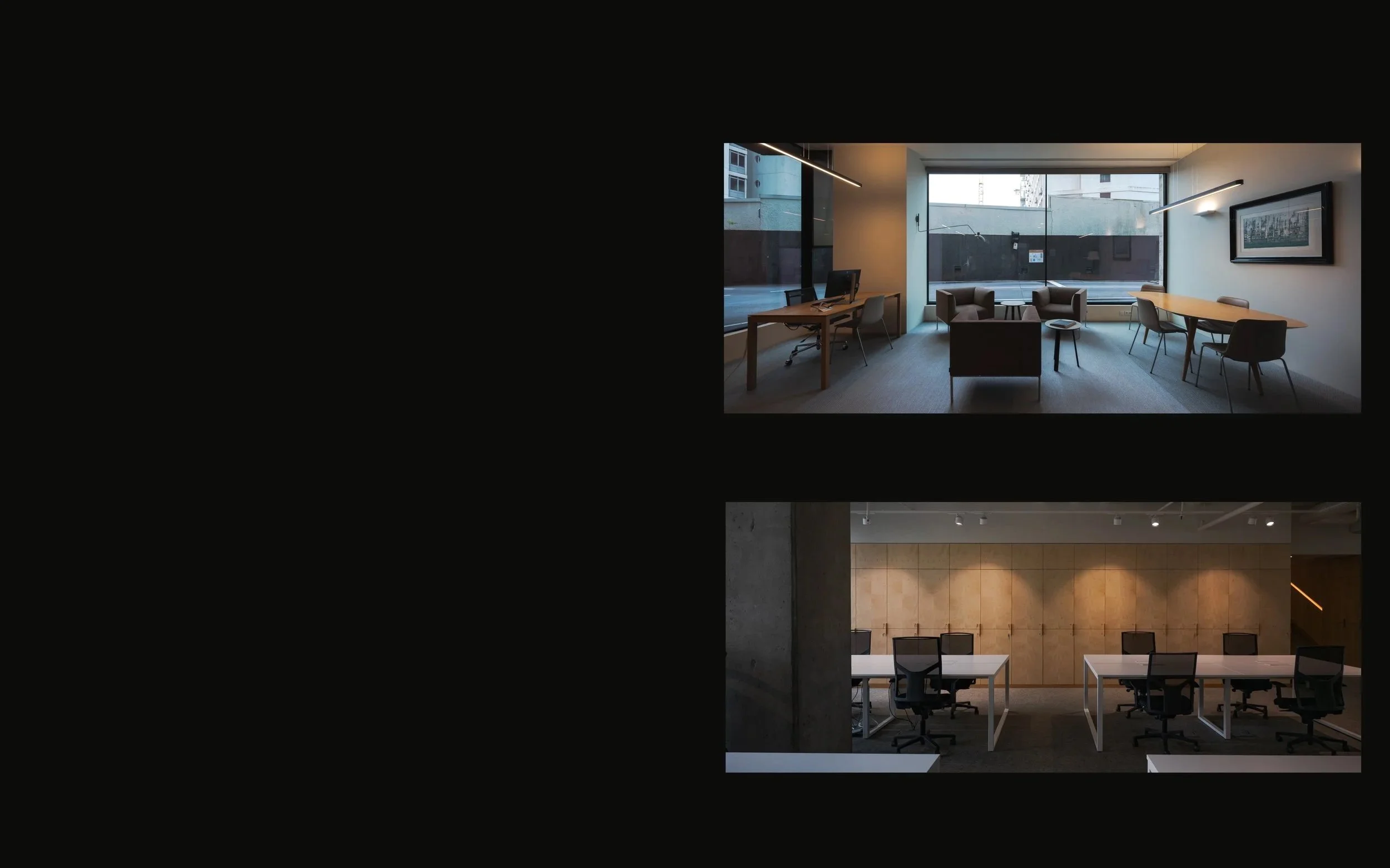
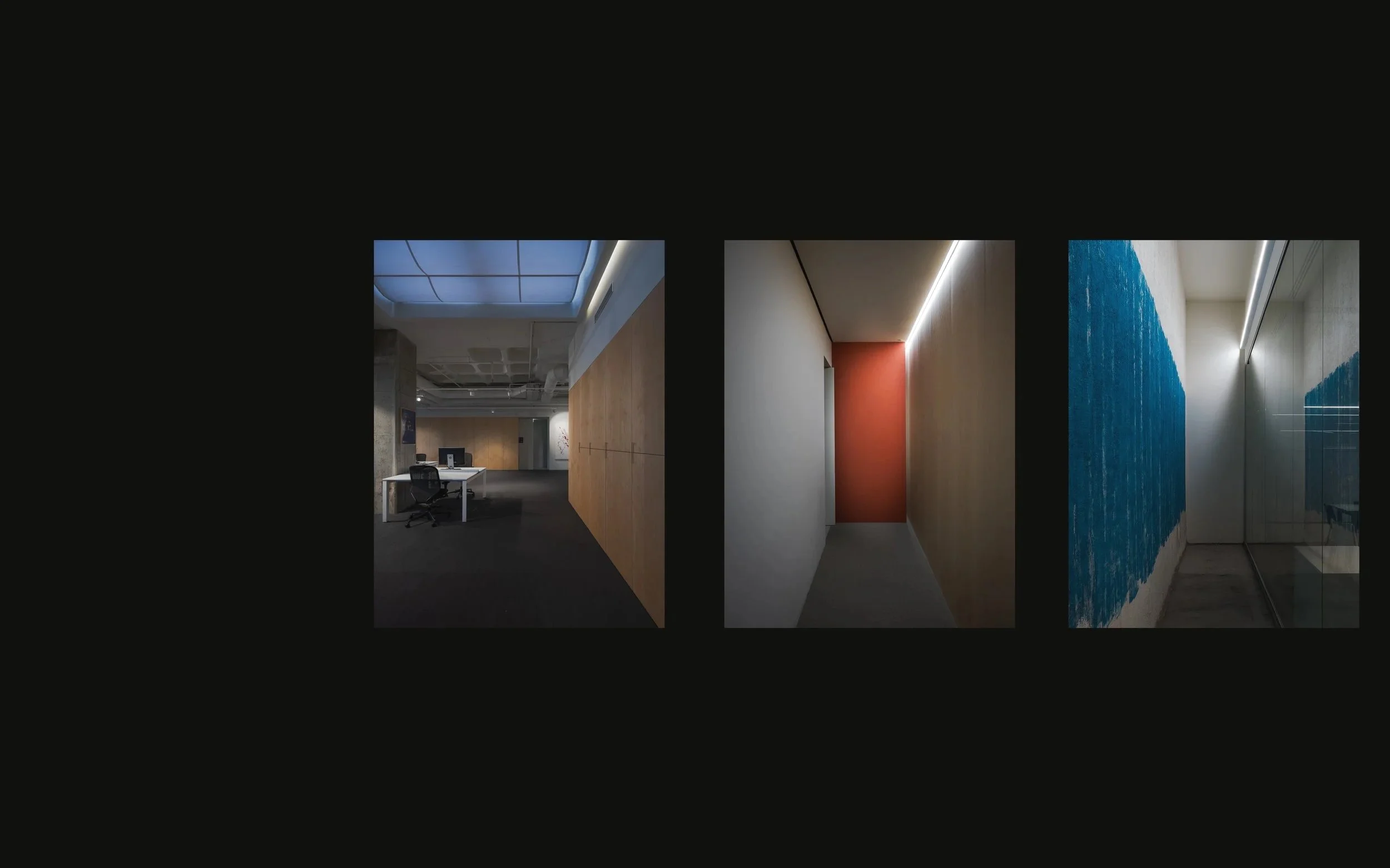
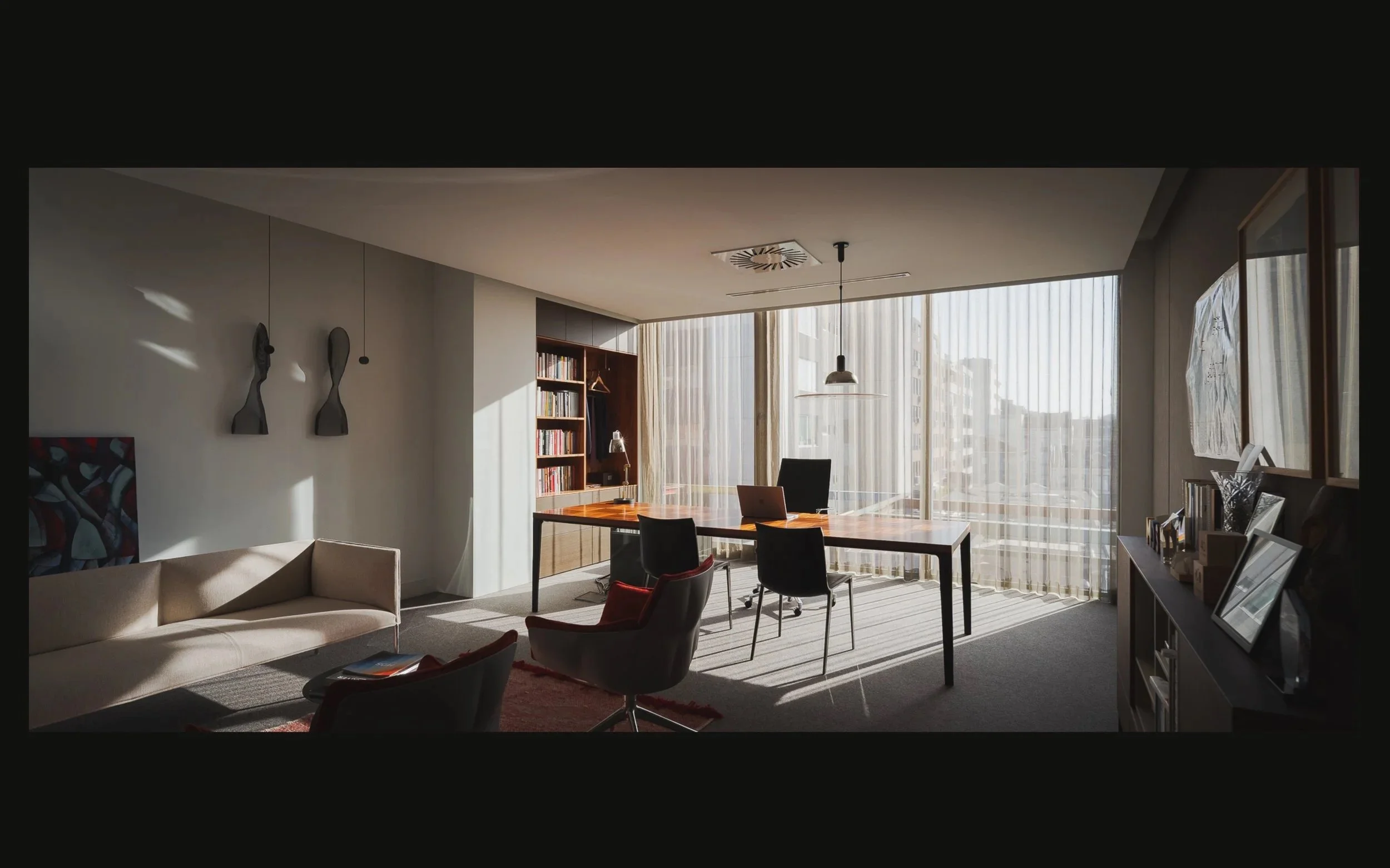
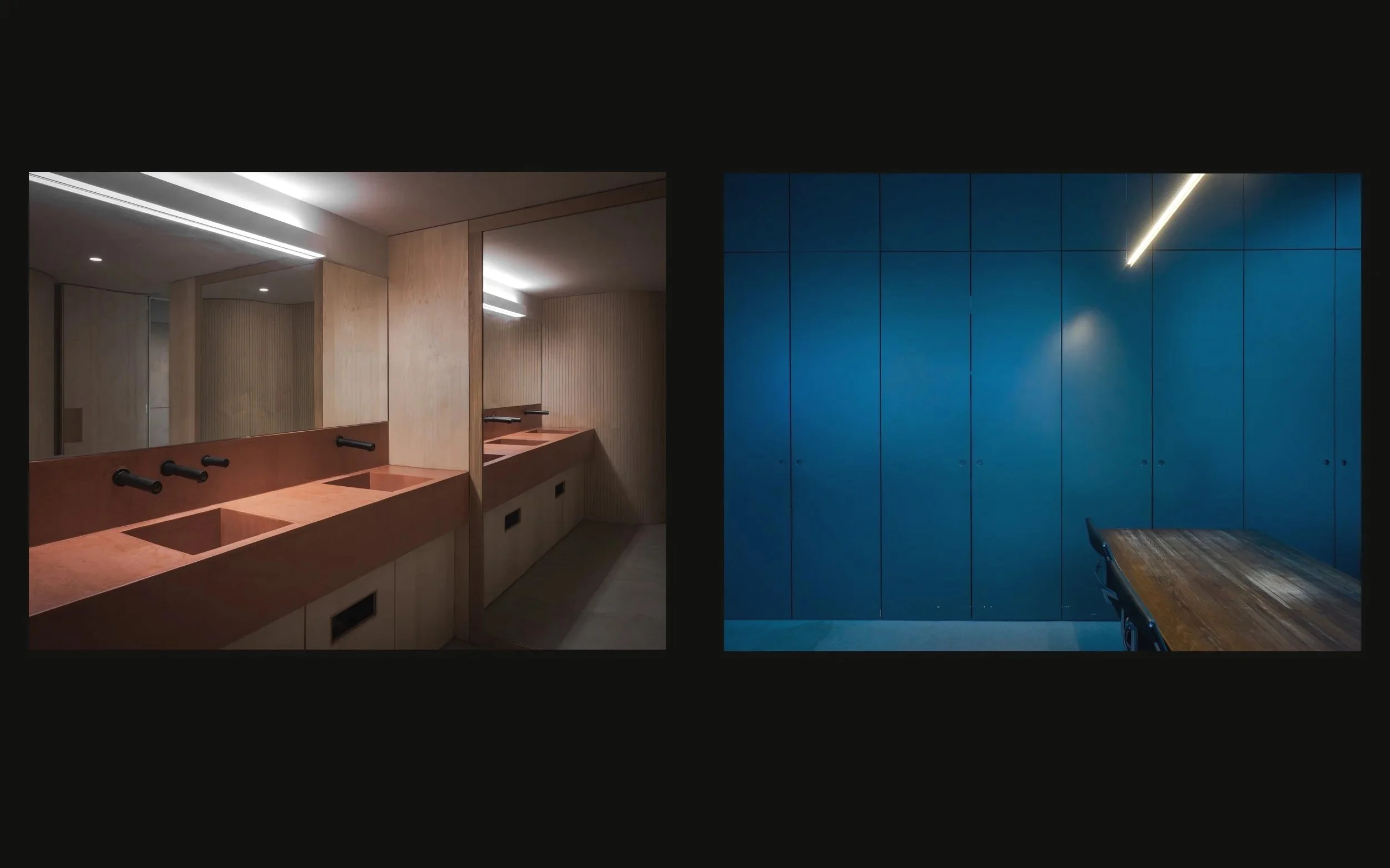
“Latent Scenes” offers an unconventional perspective on contemporary workspaces. Rather than documenting office architecture from a descriptive or functional perspective, the project explores its atmospheric and narrative potential, shifting it into a realm closer to the language of cinema.
The photographs were taken mainly at the MDS offices in Porto, with some images taken in Lisbon. However, the spaces depicted are liberated from their immediate function. Through localised, contrasting light and the deliberate presence of dense shadows, the architecture enters a state of suspension: it ceases to be merely a workplace and becomes a set of latent scenarios — spaces where something might happen, but has not yet happened.
This approach engages with a visual tradition where painting and cinema intersect. The directional lighting, the precise composition of the frame and the suspended sense of time evoke the work of Edward Hopper, as well as a cinematic imagery associated with directors such as Stanley Kubrick and David Lynch, in whose work architecture plays a central role in creating tension, anticipation and ambiguity. Each photograph functions as an isolated frame: a frozen moment suggesting a before and an after, inviting the viewer to project an invisible narrative. By favouring an aesthetic closer to cinema than to traditional architectural photography — typically characterised by uniform lighting and informative clarity — “Latent scenes” offers an alternative reading of the corporate space. A space which, despite its rationality and efficiency, contains zones of silence, ambiguity and imagination.
The project asserts that the identity of a global organisation is not built solely through the functionality of its spaces, but also through the sensory and symbolic qualities they offer. Architecture ceases to be merely a support for professional activity and becomes a setting in which ideas, decisions and possible futures are projected. “Latent scenes” is not intended to be a documentary or promotional book in the traditional sense. It is an artistic object that constructs a sophisticated, contemporary and culturally conscious institutional image, capable of engaging with the worlds of art, cinema, design and international architecture.
Fall 2026
Case Binding 180º Flat
Hardcover
104 pages
52 photographs
170g semi-matte paper
24×30cm
ISBN
PVP 50.00€
Texts by:
Guta Moura Guedes and Pedro Cardigo
Edited and Photographed by:
Pedro Cardigo